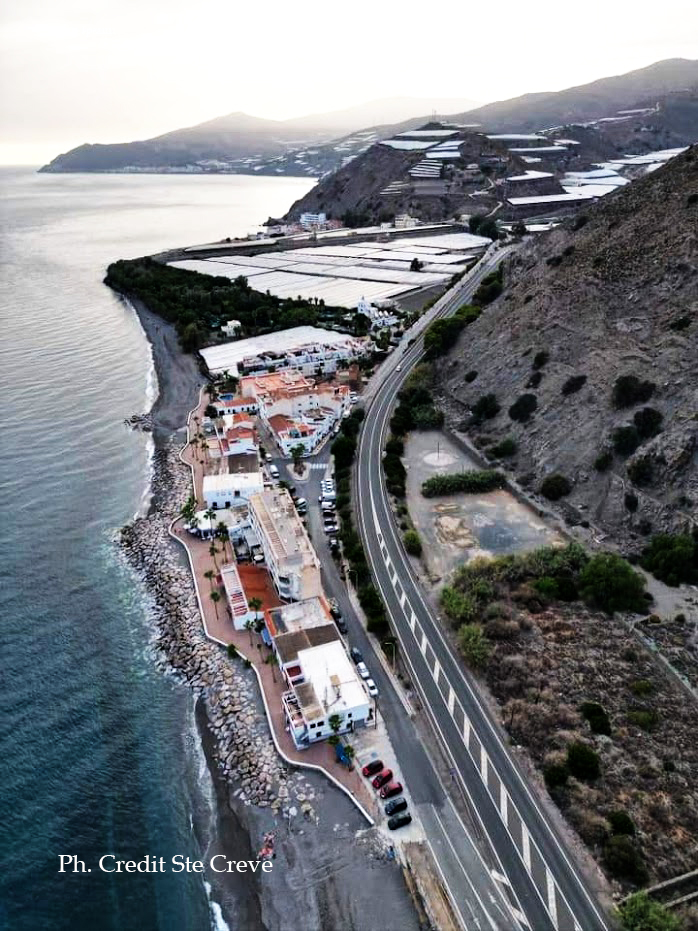
Spain boasts a long agricultural tradition, as other countries in the Mediterranean region. Agriculture represents the main economic income of Andalusia. Andalusia and Spain in general have developed an intense activity of export and R&D.
Since the last decades, the Andalusian agriculture has important figures in both, the national – Spanish – market and the international one. Spanish agriculture participates with a relevant share to the European market economy.
During the first ten months of 2022, the export of fruits and vegetables in Andalusia has marked a new record, over 10% compared to the same period of the previous year (2021). More info are available at the link to Andalusia Trade web site.
Agriculture in Costa Tropical
In the middle age, the Arabs brought the sugar cane to Spain, during time of Al-Andalus. Costa del Sol and Axarquia were the places where the Spanish cultivation of this important cane started. In Costa Tropical, Motril boasted among the most important productions of sugar cane in Europe.
30 years ago the land cultivated with sugar cane was around 2000 hectares. Today, in the are of Motril it is still possible to find a few plots cultivated with sugar cane, with only 339 hectares dedicated to this crop. Most of these plots are concentrated along the Vega del Guadalfeo, between the Puerto road and the western limit of the municipal area (source: the Town of Motril webpage).

In general, the presence of agriculture in Costa Tropical is localized and grouped in two main types: West coast of Granada, from la Herradura-Almuñecar to Motril focus on the production of tropical fruit. The East side, From Motril to the limit of Almería, cultivates in greenhouses.
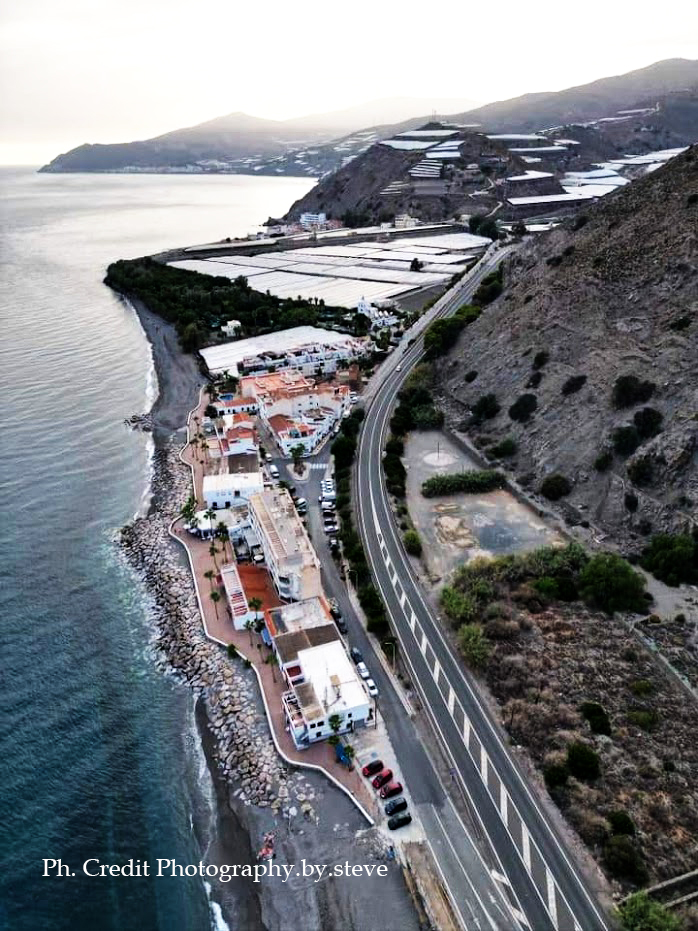
The Regional Government of Andalusia and General Secretariat of Agriculture, Livestock and Rural Development provide an interesting document about the historical roots of the diverse tradition of this part of Andalusia.
Most of the economical income of the Costa Tropical agriculture depends on the intensive cultivation of the greenhouses.
Javier Calatrava- Requena, a researcher of the Agro-environmental field who, among the others, has worked for the Andalusian Institute of Agricultural Research and Training – IFAPA, and who has investigated for around half century the optimization of the agricultural land, “has described the changes that agriculture has experienced in the century XX on the so-called Tropical Coast of Granada. These changes consist, in order chronological, in the discovery of the sanding technique, greenhouse cultivation and cultivation of subtropical fruit trees” (Source at this link).
The greenhouses: the powerful economical engine of the Spanish agriculture
Among the reasons that supported the development of greenhouse cultivation there are the important economic impact and of productivity that, as mentioned above, represent one of the economic engines of Europe for what concerns agriculture; job creation, as the intensive cultivation of the green houses produces an important impact in terms of employment on the territory, giving work to many people living in the area, but also in absolute terms in relationship to the Spanish economy; optimization of water, a sensitive topic today, due to the climate change and the importance of all the natural resources (I would recommend reading our post about water in Costa Tropical).
According to the report “Cartografía de invernaderos en Almería, Granada y Málaga. Año 2021” (transl. =Mapping of greenhouses in Almería, Granada and Málaga. Year 2021), elaborated by the of the Council of Agriculture, Fisheries, Water and Rural Development of the Government of Andalusia, in the region, the largest greenhouses area is in the Almeria territory, which concentrates 88.75 % of the total, reaching 32,827 hectares in 2021. This extension represents an increase of 273 hectares compared to 2020. For its part, the province of Granada reaches 3,391 hectares and the greenhouses in Malaga occupy 768 hectares (source: HortInfo).
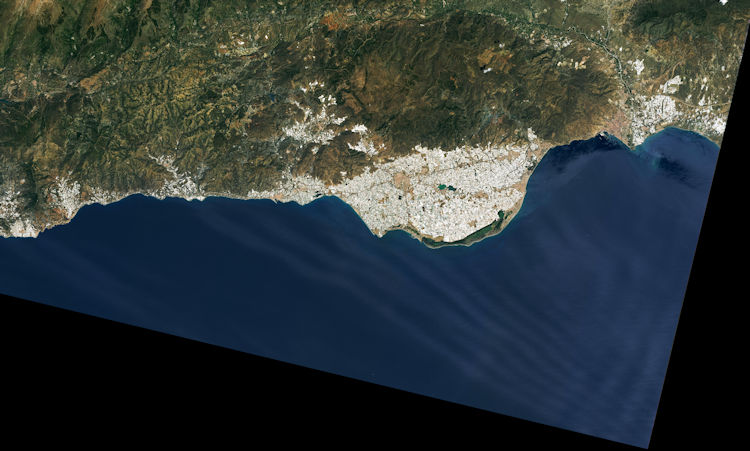
Despite the importance of the agriculture bajo plastico (under plastic), as it is called in Spanish, the exponential increase of the surface occupied by these construction has started to impact the environmental aesthetic and the beauty of the Andalusian coast.
As highlighted in the Town of Motril web: In the last three decades, the presence of the greenhouses, from a reduced number of installations without a relevant environmental impact, has come to be called a “sea of plastics” (source: Town of Motril).
In order to regulate the uncontrolled diffusion of the greenhouses in the municipal area, and to avoid the strong environmental impact that compromises the natural coastal view, the town of Motril has developed a plan that allows the building of greenhouses in specific areas, while it has prohibited their implementation in the rest of the municipal area. The details can be found following this link
Tropical Fruits
Characterized by subtropical weather, the Western part of the Costa Tropical of Granada is by itself an important resource for the area being the largest for production of quality tropical fruits in all of Europe. In this area, the cultivation of tropical fruits has started around the 1960s.
The subtropical cultivation in this part of Andalusia supports in a significant way the production, making it possible a less environmental impact of the greenhouses whose presence can be reduced in comparison to other areas (for instance, see above the figures about Almeria).
Among the tropical fruits cultivated in this area there are: mangoes, juicy and without the presence of fibers; avocado, known for its antimicrobial properties; cherimoya, in made for the 79% of water, 18% carbohydrate, 2% protein, and 1% fat, and it is rich in potassium and magnesium, for which it may help lower blood pressure; carambola (in Spanish is also know as fruta estrella, star fruit) very rich in fibers and with very high quantity of water; summer squash, (chayote in Spanish) a type of tuber growing on a plant (instead of growing underground), low in carbohydrates, it is perfect for diets for being very tasty but low in calories; sapote, rich in vitamins (among them C and A) and minerals such as potassium and calcium; macadamia nuts, low in sugar and carbohydrates rich in antioxidants; guavas in two varieties called of strawberry and of lemon (guayaba de fresa y de limón in Spanish), a fruit that many diabetic people can tolerate for a low glycemic index.
The local gastronomic offer presents these fruits in wonderful combinations of salads, for instance. Examples of how to cook or eat these fruits is offered at the Huerta Tropical blog. We found out about it because on the 27th of November a representative from the company Huerta Tropical has attended at a program in Canal Sur TV, introducing several fruits. He has explained how to eat them and mentioned, together with a doctor participating at the program, the properties of these tropical fruits produced in Motril. The video is available in Facebook. It is in Spanish but we believe it is worth to be watched 🙂
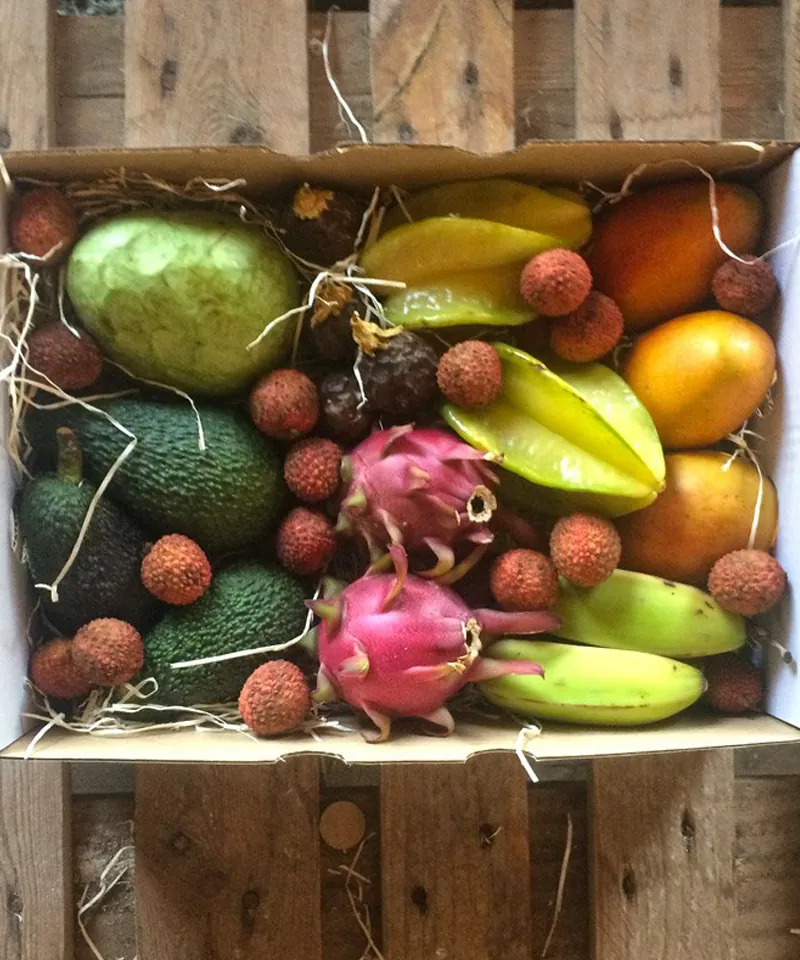
Interestingly, in this area it is possible to visit several properties (fincas) and it is even possible to pick up some fruits and eat them in place. What is more, we found out about an interesting place, the Finca Experimental El Zahorí, belonging to the town of Almuñecar, has started to conduct research in 1986, and has had the important role to disseminate the results and knowledge to farmers.
At the moment it seems not to be possible to visit Finca Experimental El Zahorí, but the information available say that it is usually open from Monday to Friday, from 8:00 to 15:00, and it is closed during the weekends and bank holidays. In Summer it is open from the 1st of June to the 15th of September from 8:00 to 14:00.
What else can we say about these fruits that in Andalusia and Costa Tropical are available Km 0? The properties of these fruits make them extremely interesting for the presence of low sugar and being rich in water. Their nutrients contribute to health benefits, boosting the immune system, promoting health, providing energy boosts, help reduce the risk or manage conditions like cardiovascular disease, diabetes, and digestive health.
If you are enjoying reading our blog, subscribe and we’ll let you know when a new post is out (basically once a week)






 our journey to Spain
Leave a comment