
A stunning show of the sky
We came to Spain from Finland, a place where the sky makes people spend time outside, with the nose up, trying to spot the Northern lights, or other lights phenomena. In fact, also the hours of day light – where the land of the North is not under the complete control of Kaamos – it is possible to witness magnificent games of light: rainbow clouds and pillars of lights are also produced by the Sun. These shows of mother nature usually cost something in terms of hours to be spent outside in the coldest temperatures human being can live in! My personal record of cold experienced was -40 Celsius in Lapland in 2001…and yes, it was cloudy! 😀 But I was more lucky at -35 Celsius in the beginning of the year 2016.
Let’s move back to Spain, where the weather is magnificent, warm, and the sky is blue almost all the time.
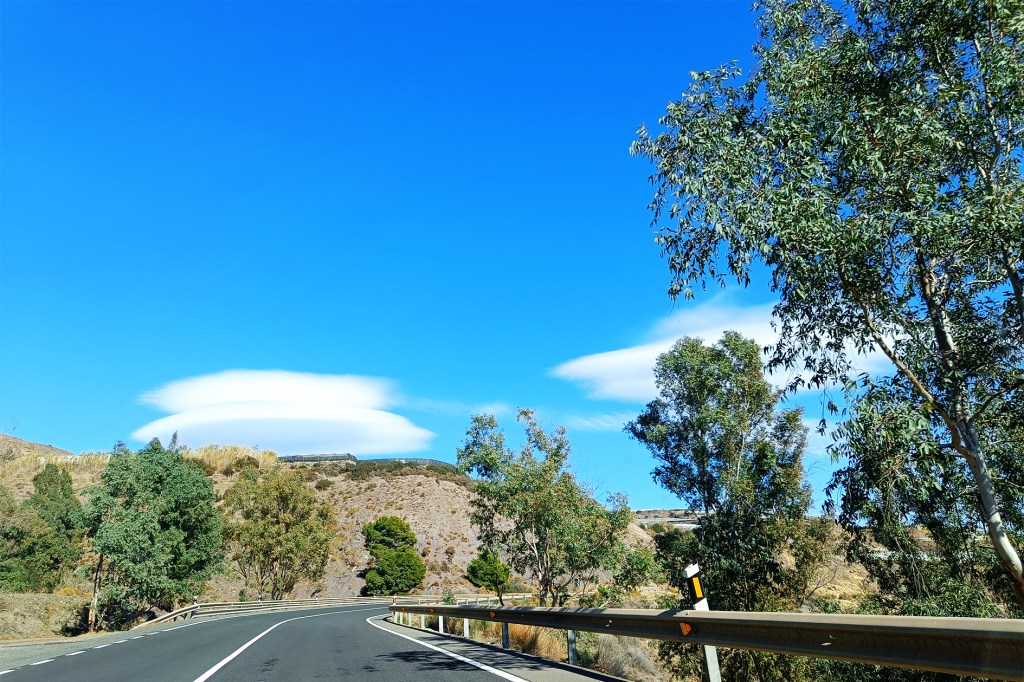
Driving on the N340, a very good road running along Andalusia and that offers beautiful coastal views, we met, for the first time live, some beautiful clouds that look like pancakes. Sometimes even towers of pancakes! Before coming to Andalusia, we had only seen pictures of these clouds, and we were not even sure of what they are. Well, they are sooo beautiful! So, we did a bit of research, and this is what we found and understood about lenticular clouds, this is their common name.
Altocumulus Standing Lenticular Coulds are orographic what?
We found out that the official nicknames of these clouds are “flying saucer” or “stack of pancakes”. What causes the lenticular clouds? What are they exactly?
We need a bit of definitions, but don’t panic immediately and nobody will get hurt! Only a few lines.
Googling “Lenticular cloud” you will find almost everywhere a definition that includes the word “orography” or orographic”. According to the Oxford dictionary, orography is the branch of physical geography dealing with the formation and features of mountains. When it comes to the relationship of the clouds with orography, the best explanation, easy to understand for me, at least, is provided by the US National Weather Service of the United States: “When sufficient moisture is present above mountain-top level, ACSL clouds develop within the crest of these mountain waves where the air is rising”. And also: “they (the lenticular clouds, n.a.) are associated with waves in the atmosphere that develop when relatively stable, fast moving air is forced up and over a topographic (relating the physical arrangement of the area: the mountains in this case) barrier that is oriented more or less perpendicular to the direction from which the upper-level wind is blowing”.

In other words, we have to imagine how the wind and atmospheric pressure influence the portion of sky above the peaks. The wind blows and raises towards the peak of the mountains, over their top. When this wind meets the moisture that is hanging above the mountains, it pushes up and down the flow of air. At the same time, the moisture present in the sky forms these dishes, above the top of the mountains. Another detail is the influence of the frequencies changing according to the raising/lowering altitude, influencing the widening of the surface in relationship to the altitude. But this gets too technical, also for me.
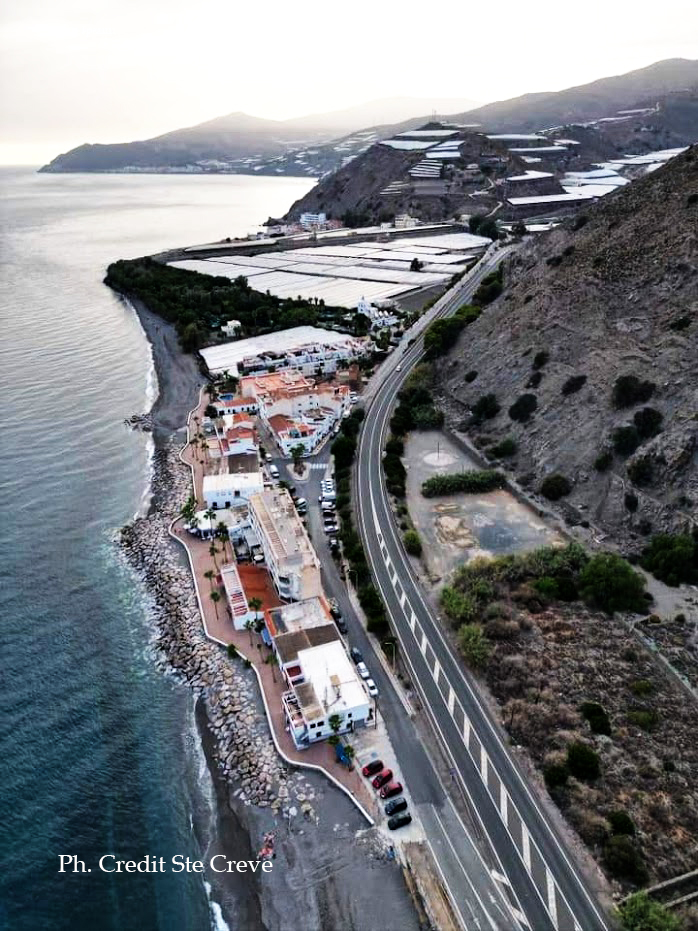
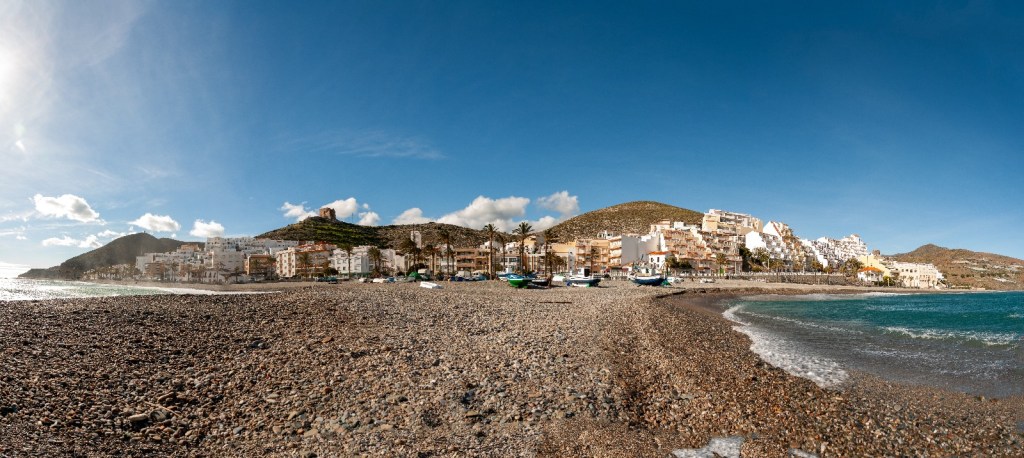
In Costa Tropical we have seen these clouds almost everywhere. If you are interested in spotting some of them, just keep your nose up, and look above mountains in the inland and on the seashore. You’ll love it!

Please, remember, this is not NATURE, and it is not even an academic research web. I know very well the difference between the wish to popularize science, share info as correct as possible, and the desire to spread pseudoscience. This is not pseudoscience. We try to give the most correct and clear info using the official channels or sources that are as reliable as possible for those who are as curious as we are. And if you want to add something, a constructive feedback is always welcome and considered a positive feedback, under this beautiful sky 🙂
This entry is dedicated to my dad. He passed away this week. The sky is what we look at when we say goodbye. Ciao papá.
If you enjoyed this post and want to read our weekly (about) entries about our experience in Spain, subscribe 🙂


 our journey to Spain
Leave a comment